

Beyond Webinars: The ROI of In-Person Industry Conferences
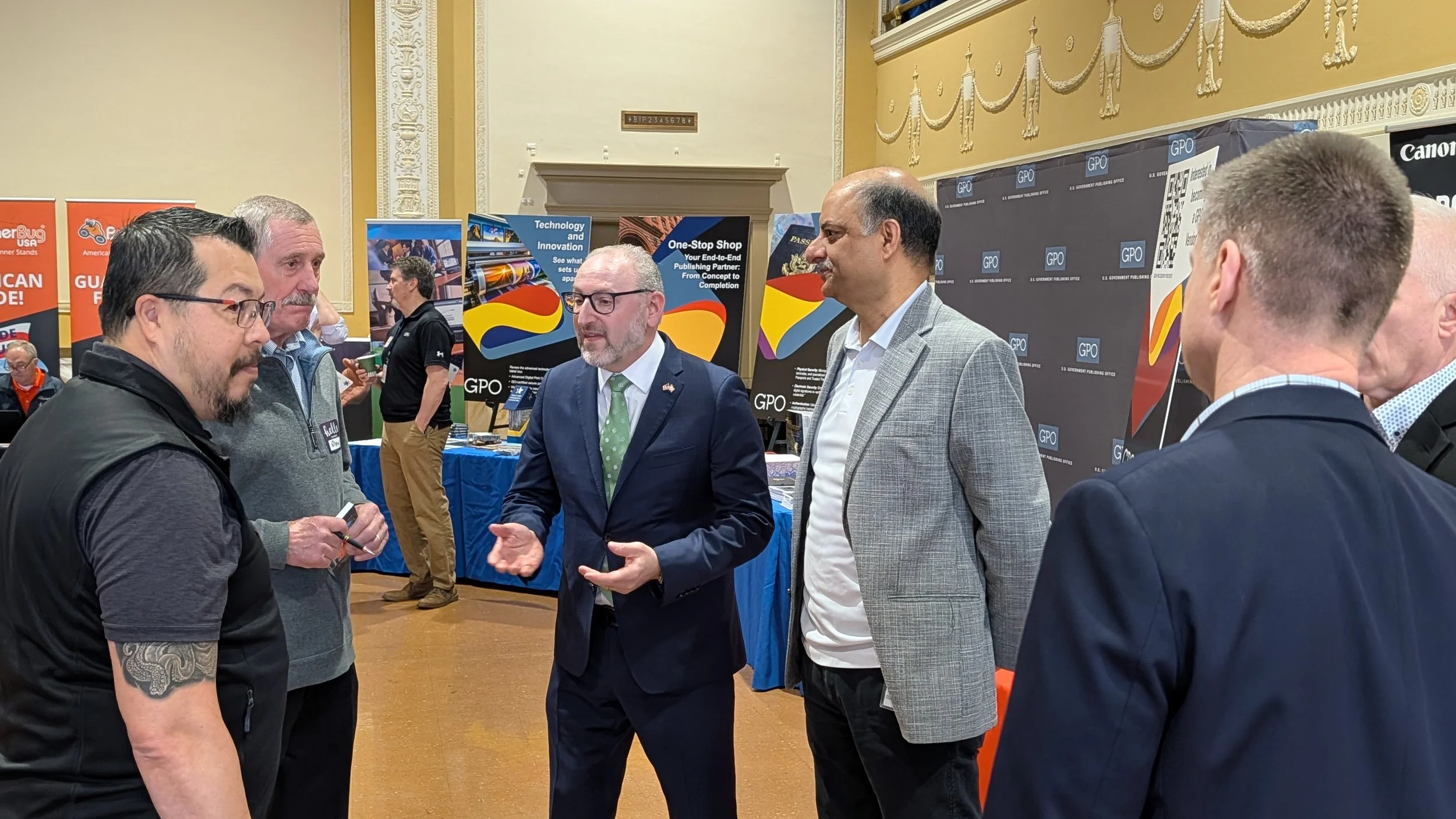
GPO Director Hugh Halpern speaking with IPMA Roadshow attendees.
In print and mail operations, it is easy to become internally focused on daily runs, equipment upkeep, and shifting postal regulations. You can fill every week with production schedules and virtual meetings without ever setting foot outside your facility. Webinars and online demos are convenient, but they rarely challenge your perspective. There is no substitute for what happens when you step away from the shop floor and stand in the same room with people who solve the same problems you do.
I was reminded of this during an IPMA roadshow event at the Government Publishing Office (GPO) in Washington, D.C. Walking through a facility that has operated for over 165 years puts modern operational problems into perspective. GPO Director Hugh Halpern pointed out that they have worked out of the same building since Lincoln’s inauguration in 1861. GPO occupies 2 million square feet and prints everything from U.S. passports to the Congressional Record, yet their operational headaches look familiar: moving from legacy workflows to automated inkjet, adding automated plate-changing systems, and replacing a 40-year-old job submission platform. Whether your team has five people or several hundred, scale does not change the core challenge of modernizing production.
Virtual events are fine for status updates, but live industry conferences offer distinct advantages that a screen cannot match.
Honest Conversations Replace Sales Pitches
Webinars give you curated slide decks. In-person events give you candid reality.
John Cruser of Bloomberg noted during our conversations that while travel budgets are always scrutinized, seeing how large-scale facilities navigate MIS overhauls and change management in person offers value that cannot be replicated remotely. Face-to-face discussions build trust quickly, making people willing to share what went wrong during an implementation, not just the sanitized success story.
Danny Kirkland, who manages 8,000 orders a month at Encompass Health, pointed to vendor evaluation as his primary focus. During a presentation by Katelin Shanks of Racami, Shanks cited that 63% of software implementations fail to meet post-launch expectations. That kind of figure resonates differently when you can immediately turn to the manager sitting next to you and ask which Web-to-Print or MIS red flags they ran into during their last rollout. Those unscripted hallway exchanges are where you get unbiased software advice.
Solving Operational Bottlenecks on the Spot
The fastest way to troubleshoot a production issue is often through someone who tackled it six months ago.
Jessica Seiter from Cedarville University described how an industry contact rescued a major capital investment. After vendor training on a new laser cutter proved inadequate, Wesley Troup from the World Bank Group stepped in directly to train her staff. That peer support helped Cedarville justify further equipment investments, bring dye sublimation and laser engraving in-house, cut external vendor costs, and handle campus apparel and awards internally.
Del Shankle from Christus Health pointed out that live sessions let managers ask technical questions in real time. Shankle worked directly with Greg Kestler of General Formulations on adhesive selection for distinct signage substrates, and walked through inventory management setups with Bryan Matlock from Ricoh. Getting immediate, specific answers to operational bottlenecks saves weeks of email tag and trial-and-error testing on your own floor.
Direct Access to Live Technology and Workflows
Reading a spec sheet or watching a prerecorded hardware demo does not tell you how a machine handles tough stock, how intuitive the interface feels to an operator, or how loud the unit runs. In-person trade shows and conferences let you see equipment run live, inspect finished output up close, and ask technicians detailed questions about maintenance schedules and downtime.
Digital fatigue is real, and relying strictly on remote learning narrows your operation's view. Conferences give you an unofficial advisory board of industry peers who face your exact regulatory, staffing, and mechanical hurdles. If you want to de-risk your next software purchase, explore new equipment capabilities, and troubleshoot current production bottlenecks, make room on the calendar to get out of the plant and attend an industry event in person.